Top 10 Android App Development Tools in 2025


As the Android smartphone takes over the global market, the application developers use an ever-growing set of tools to create powerful, efficient, and user-friendly applications. In 2025, some tools have emerged that are game-changers in the Android app development industry, giving users better capabilities to streamline the process of development, improve app performance, and incorporate the latest technologies such as AI and ML. Here is a detailed guide on the top 10 Android app development tools you should consider this year.
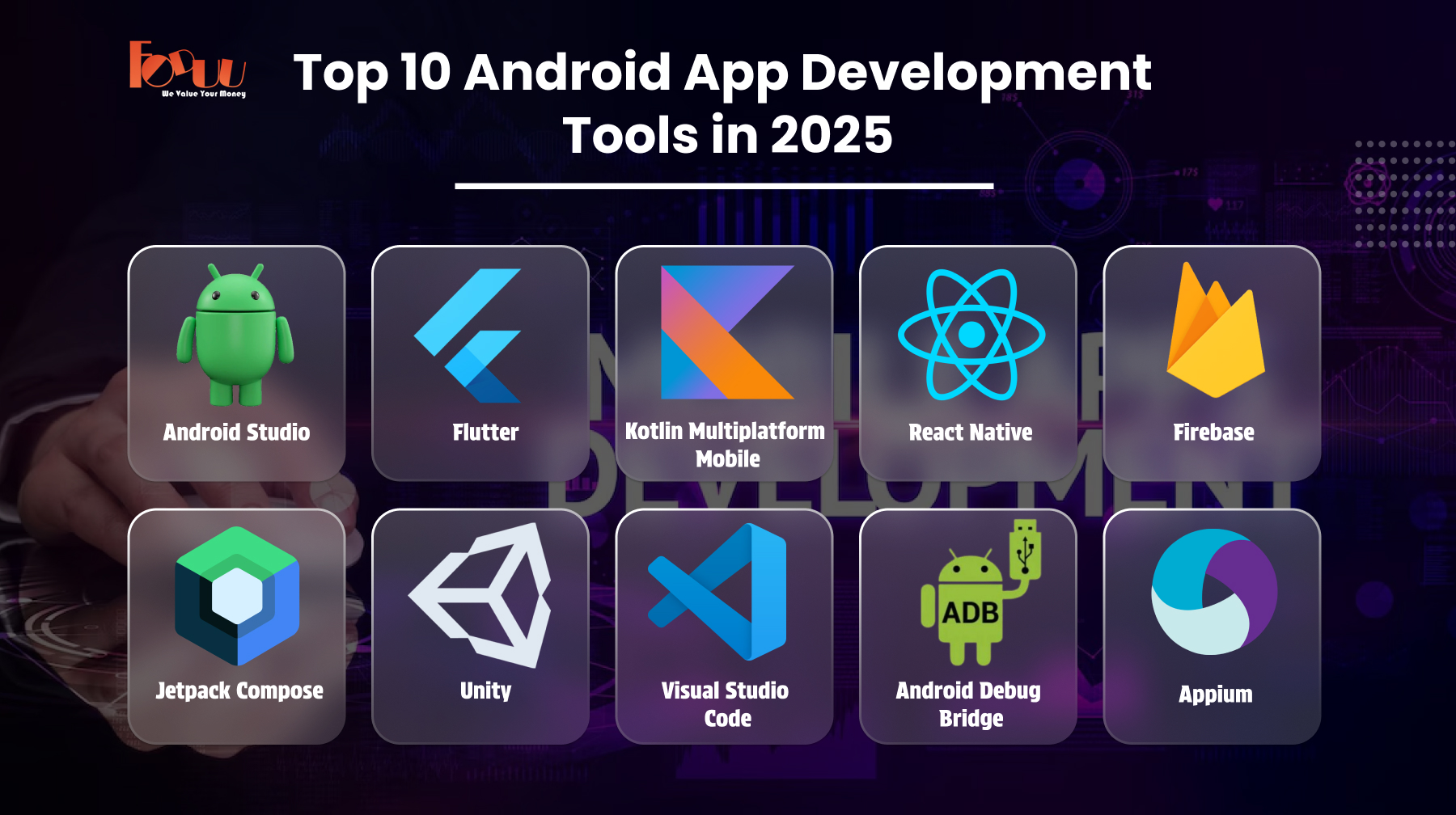
Android Studio is the official Integrated Development Environment (IDE) for Android development and is a cornerstone for developers. Its seamless integration with the Android SDK, robust debugging tools, and advanced code editing features make it indispensable.
Key Features :
Android Studio keeps innovating, especially in supporting Jetpack Compose, Kotlin Multiplatform, and integrating with AI-driven tools that help boost the quality of the code and app performance.
Flutter has gained enormous popularity as a cross-platform application development framework. It is developed by Google, and Flutter works on a single codebase for creating applications for the Android, iOS, web, and desktop platforms.
Key Features:
In order to make further improvements in the performance and widgets, Flutter offers a strong active community. Therefore, it does not lose focus on its goals and is most preferred by Android developers due to its compatibility with Material Design 3 and integrations with Firebase.
Kotlin, the default language for application development in android, has lately expanded its offerings with Kotlin Multiplatform Mobile that allows developers sharing code between their Android and iOS applications.
With Kotlin's increasing ecosystem and enhanced support for multiplatform development, KMM is a great solution for developers looking to efficiently build applications for multiple platforms.
Also Read: How Much Does iOS App Development Cost in India
React Native is a product from Facebook, still one of the top contenders in the cross-platform development landscape. It uses the JavaScript framework, which allows it to develop applications that look and feel native.
Key Features:
Better performance is offered in React Native while ensuring compatibility for APIs on both Android and iOS. It's suitable for a startup or company looking to get apps up as cheaply and quickly as possible.
Google's Firebase is a powerful BaaS that can make backend development much easier by letting developers work on frontend things.
Key Features:
Firebase is a favorite among developers because of its tight integration with Android Studio and its comprehensive suite of tools for analytics, messaging, and storage.
Jetpack Compose is a declarative UI development approach that makes it easier to create dynamic and intuitive user interfaces.
Key Features:
Jetpack Compose continues to evolve with better tooling and support for large-scale apps. It's a must-have for developers focusing on modern Android app development.
Developers interested in constructing more sophisticated graphics-based games or apps prefer Unity as their first option. The engine supports 2D and 3D development.
Key Features:
Unity is an ideal tool for immersive app experiences due to its continuous updates for AR/VR capabilities and its robust rendering engine.
VS Code is a lightweight yet powerful source code editor that has become the favorite of many Android developers for its flexibility and extensive plugin ecosystem.
Key Features:
VS Code is a perfect choice for developers working on hybrid or cross-platform apps using frameworks like React Native or Flutter, given its versatility and performance.
ADB is a command-line tool that enables communication between your development machine and Android devices. It is an essential tool for debugging and testing apps.
Key Features:
ADB will continue to be a must-have tool in 2025 with the growing complexity of apps. It will help diagnose issues, test performance, and ensure compatibility across devices.
Appium is an open-source tool for automated testing of mobile applications. It supports native, hybrid, and mobile web applications on Android and iOS platforms.
Key Features:
With automated testing becoming key to app quality, it's an excellent tool for developers and testers as it is flexible and widely adopted.
The Android app development ecosystem in 2025 is diverse and strong, offering all of the power one could want for a given scenario. Be it building native applications using Android Studio, or discovering cross-platform options like Flutter and React Native, or even maximizing application performance through Firebase and Jetpack Compose, there's always something available. Through these top 10 tools, developers will be able to design innovative and high-quality applications to meet modern users' expectations. Choose the tools that align with your project’s requirements, and you’ll be well-equipped to tackle the challenges of Android app development in 2025.